After a chaotic formation lap resulted in a suspended start procedure, the drivers sat in the pit lane as the rain abated and the track began to dry.
It left them facing a conundrum about whether to start on intermediate tyres or slicks.
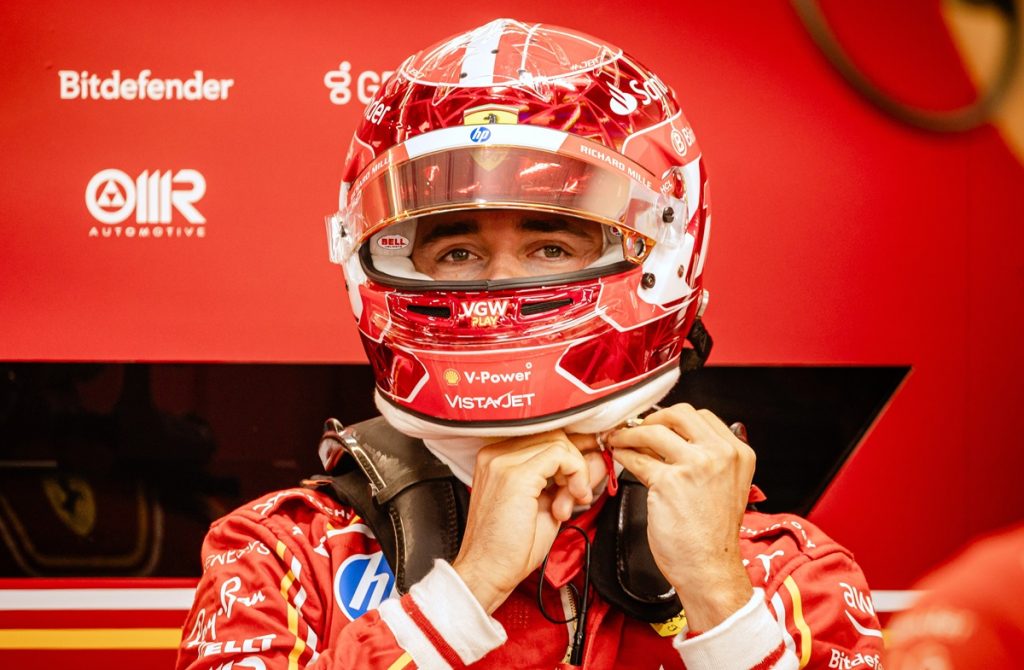
Pole-sitter Max Verstappen went with the intermediates, while Lewis Hamilton, P2 on the grid, started on the soft Pirelli rubber, as did Leclerc.
Both drivers lost positions on the first lap of racing and fell out of the points.
Leclerc’s troubles were compounded when he clipped Nico Hulkenberg’s Audi and had to pit for a new front wing. He also changed onto the intermediate tyres.
Hamilton persevered on his slick tyres, which was a decision that paid off as he worked his way up to third place. Leclerc, who made an extra pit stop, recovered to fourth place.
The win, though, went to Verstappen and Red Bull’s strategists.
Leclerc says Ferrari needs to examine Red Bull’s decision-making, as the team gets its strategy calls right more often than Ferrari.
“I was aligned with the team,” Leclerc said when asked about Ferrari’s decision to start the race on the soft Pirelli tyres.
“I think it was a close call, as it’s always in these conditions.
“And yeah, I will speak whether to split the cars in those conditions is the best possible way.
“But it’s also true that when you split the cars, by definition, there’s one very wrong choice and one very good choice, and it’s very difficult to have an in-between scenario where both scenario kind of pans out the same.
“So we thought we were doing the right thing, obviously, but clearly there’s one team in particular, and that is Red Bull, that gets it right most of the time with both cars, and for that we need to understand what they are doing better than we do.”
The Ferrari driver did, however, concede that the general lack of data on the intermediate tyres across the grid also made the decision more difficult.
Sunday’s Grand Prix was the first race of the F1 2026 season to be affected by wet conditions.
“I mean it’s very difficult. It was the same for everybody,” he said. “I think even though we had a big bit of data on our side, it’s in conditions that have nothing to do with the conditions we had.
“So yeah, it was based on intuition, on looking at the ground and the surface looked pretty dry.
“The thing is that the biggest question mark we had is how much water there is in the holes of the tarmac, and there was a lot more water than I think majority thought there was, and that’s why the slick ended up being the wrong decision.”