There is always a sense of excitement in the air ahead of a Liverpool-Man United clash. The two most decorated sides in English football history, Liverpool and United have forged a deep rivalry that harkens all the way back to their working-class roots.

The last few seasons have felt a little different. United’s descent into cartoonish ineptitude has tilted the balance of power quite dramatically in favour of the Merseysiders. In what can only be described as the ultimate baptism of fire, incoming United manager Mauricio Pochettino will be hoping for a new manager bounce in Sunday’s daunting trip to Anfield (yikes). In anticipation for Sunday’s megawatt clash, I thought it would be a fun exercise to pick my all-time Premier League combined XI from Liverpool and Man United. Here goes nothing.
GK: Peter Schmeichel (Man Utd)
This was ultimately a bit of a coinflip. Allison has been sensational for the Reds and could easily have made this list. But I just couldn’t look past the half-crazed gaze of United legend Peter Schmeichel (perhaps I made this choice out of fear). Schmeichel was like a real-life Mister Fantastic in goal, making himself almost unnaturally big in scenarios. He controlled his area with the fervour of an overzealous drill instructor, striking fear into opponents and teammates alike.
RB: Trent Alexander-Arnold (Liverpool)
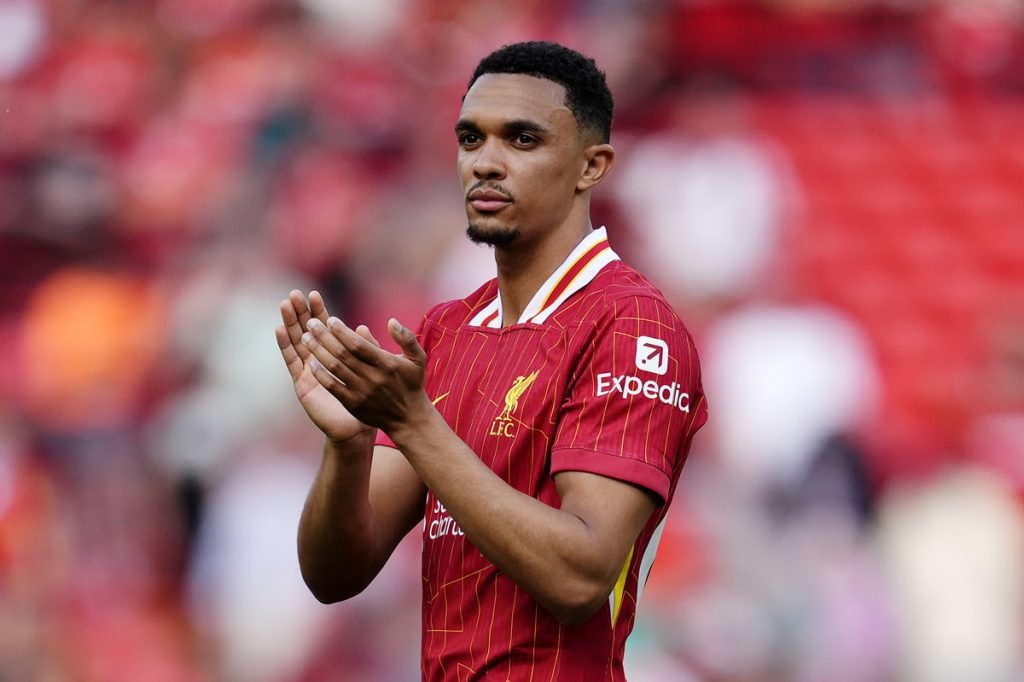
I think Gary Neville is one of the most underrated players in English football. Relatively limited by modern footballing standards, Neville was nonetheless a tremendous team player, sacrificing himself on the altar of Beckham’s genius with plenty of thankless runs. However, Trent Aleanxder-Arnold is probably the most revolutionary English fullback in the history of the game. Sure, inverted fullbacks were hardly a niche concept around the time of Alexander-Arnold’s emergence. But the Liverpool fullback pushed the concept into a brave new direction (especially for more dogmatic English defensive systems). His ability to dictate play in advanced areas was one of the key forces behind Liverpool’s noble resistance to City.
CB: Virgil van Djik (Liverpool)
Isn’t it crazy to think that Virgil Van Djik fell just seven points short of Lionel Messi in the 2019 Ballon d’Or race? That stat gives you some indication of the transformative effect that Van Djik had on Klopp’s team. Van Djik is the oh-so cliched ‘Rolls Royce’ of a defender, pairing speed and size with a preternatural ability to read the game (he was like a footballing Nostradamus). The only active player on this list who still plays for one of these great institutions, van Djik has certainly lost a bit of his lustre in recent seasons (the managerial roundabout has affected the root stability of the club). Still, he is currently forming an encouraging new partnership with Jeremy Jacquet.
CB: Jaap Stam (Man United)
I know that many will call foul on my decision to omit Rio Ferdinand. Look, you don’t need me to tell you how great Rio was (he will tell you himself). But I personally believe that Stam’s peak was greater than any defender any Premier League history. He dominated in his three seasons at the Theatre of Dreams, winning a treble and three successive Premier League titles. Known for his intimidating physicality and mind-boggling pace, Stam was also far more cultured in possession than people remember. Named UEFA defender of the year two out of his three years at United, Stam’s career was cut short after a high-profile falling out with Sir Alex. It’s a testament to Stam’s genius that Sir Alex signals out his departure as one of the biggest regrets of his managerial career.
LB: Denis Irwin (Man United)
There’s a certain breed of modern football fan that thinks the game started right around the time of the Messi-Ronaldo rivalry (you can see their fresh-faced 20-year-old faces plastered on YouTube right now). Denis Irwin is proof that the early years of the Prem wasn’t just some prehistoric interlude. You hear about players who always gave a solid 6 or 7; Irwin always gave a solid 8 or 9. Irwin was a marauding fullback who would have absolutely thrived in the modern game, overlapping and scoring plenty of goals in his pomp. While deployed primarily on the left, Irwin was assured with both feet and could play on either flank. He is also one of the most underappreciated dead-ball specialists of any era.
CM: Roy Keane (C) (Man United)
The most influential captain in English football history, no Premier League list is complete without the irascible Keane in the mix. Sure, he didn’t possess the passing range of someone like Scholes (who is constantly fawned over by the ex-Barca contingent). Nor was he a G/A merchant ala Bruno Fernandes. But he was a quietly devastating midfield presence, rarely losing possession while always chipping in with goals when they were most needed. But the real reason he makes this list comes down to two things: leadership and fear. He could galvanize his side like no other and carried an aura that crippled the uninitiated (and literally crippled Alf-Inge Haaland).
CM: Steven Gerrard (Liverpool)
Stevie Gerrard just had everything (sans a Premier League winner’s medal). The complete midfielder, Gerrard’s rangy running ability would have perfectly complemented Keane’s more thuggish persona. The Anfield icon could switch the play on a dime and possessed one of the fiercest long-range shots in Premier League history. Can you imagine being an up-and-coming central midfielder and coming up against the combination of Keane and Gerrard? It’s like the footballing equivalent of facing Waqar and Wasim in their prime.
RW: Mo Salah (Liverpool)
David Beckham enthusiasts might feel a bit raw about his exclusion. Any genuine self-reflection would conclude that Mo Salah is the only possible candidate for the right-wing role. Salah- alongside de Bruyne and Haaland- is probably a compelling candidate for best Premier League player of the last ten years. The Egyptian King terrorized Premier League fullbacks with his pace and unparalleled dribbling abilities, consistently sending players to the tuckshop ala Joao Cancelo and Bernardo Silva. Was probably hard done by not receive a Ballon d’Or during Klopp’s Anfield revolution.
LW: Ryan Giggs (Man United)
Longevity is sometimes a deceptive barometer of greatness (just look at Harry Maguire). Ryan Giggs is the perfect synthesis of exceptional quality and commendable longevity. The Welsh wizard burst onto the scene as an electrifying left-winger before evolving into a more versatile presence in the latter years. For the sake of this ranking, I’m focusing on the curly-haired winger who delighted fans in those early years. Giggs had the endurance of an elite cross-country runner paired with ankle-breaking changes in direction. The all-time Premier Leage assist’s record holder possessed a wand of a left boot that never lost its potency with age.
STR: Eric Cantona (Man United)
While comfortable playing in a conventional 4-4-2, Cantona’s inclusion allows you adapt to a more modern 4-2-3-1 (Giggs or Cantona could play in the 10 while the final inclusion- spoiler alert- could play on the left). Regardless of formation, King Eric had to be on this list. Arguably the single most transformational player in Premier League history, Cantona was the maverick catalyst behind United’s early domination of the league. The versatile forward was both a predatory finisher and playmaker extraordinaire, renowned for his innate ability to turn it on in big games. Cantona was also a hulking physical presence who never cowered to anyone (one Crystal Palace supporter can attest to that).
STR: Cristiano Ronaldo (Man United)
Need I say more? Cristiano Ronaldo arrived at Old Trafford a pimply-faced, scrawny kid with a crippling fetish for unnecessary stepovers (Sir Alex wasn’t best impressed). But he soon evolved into an unstoppable force, ushering in a new era of Mancunian dominance that included Champions League glory and three successive league titles. The first Premier League-based player to win the Ballon d’Or since Michael Owen, CR7 is probably the only player who can legitimately rival Thierry Henry’s peak Premier League form.