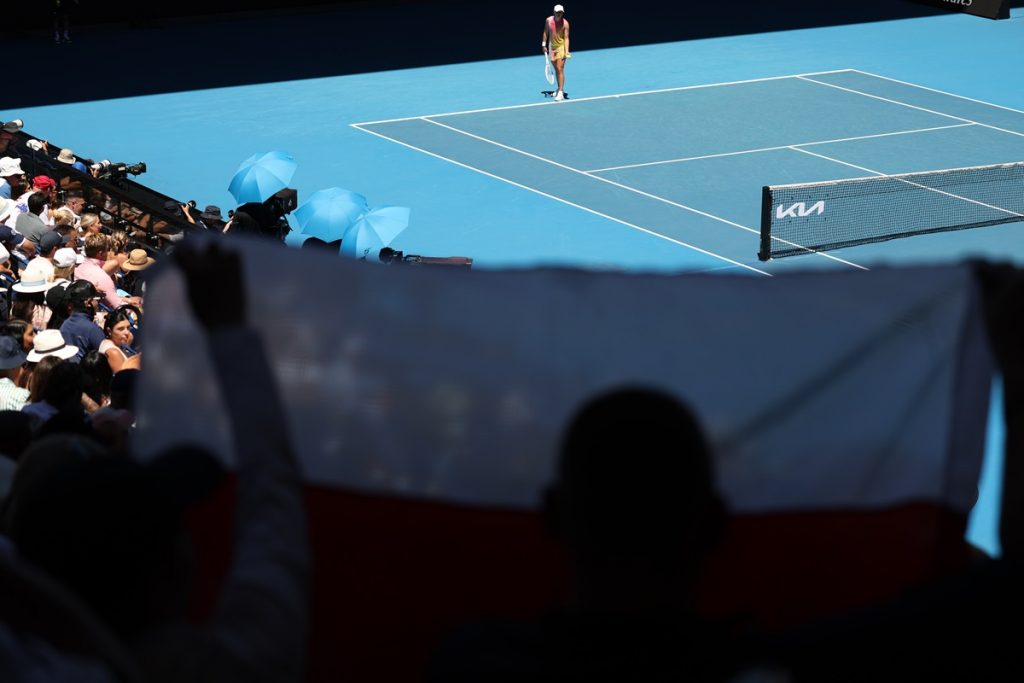
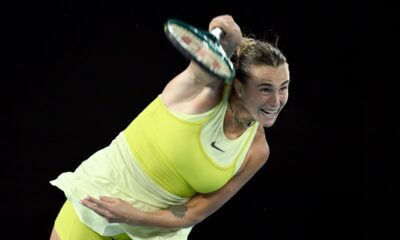
Former World No.1 Iga Swiatek fell prey to the current outbreak, forced to withdraw while trailing Alison Lin in their round of 32 clash. It marked only the 3rd time in Swiatek’s storied career that she has been forced to retire mid-match (which is a testament to her general conditioning). But it’s just another (literal) kick in the stomach for a player whose confidence is at an all-time low. The clay-court demigoddess was probably hoping for a timely boost switching to her favoruite surface. As it stands, the Pole looks devoid of confidence and stands on the precipice of a major rankings slide.
The origin of a slump
How does a player who won 37 straight matches in 2022 suddenly lose all her confidence? I think we can trace this malaise back to August 2024, where the then-No.1 tested positive for banned heart medication trimetazidine. She received a slap on the wrist, suspended for one month during peace time (there were no slams missed). But the psychological damage was done, as Belgian powerhouse Aryna Sabalenka rose to the top of the rankings in October 2024 (Swiatek hasn’t been back to the top since). The Pole, who revelled in her No.1 status, has played with an inferiority complex ever since.
Coaching turbulence
The drug ban coincided with her split from coach Tomasz Wiktorowski. She achieved success under the tutelage of her Polish compatriot, picking up four slams to firmly establish herself as the world’s best player. But she felt that she needed an international perspective if she wished to taste sustained success on the quicker surfaces (a slightly xenophobic perspective against her own people, but hey). She decided to hitch her wagon to highly decorated Belgian coach Wim Fissette, who helped guide the likes of Clijsters and Osaka to Grand Slam glory.
Wim set up for failure
Wim Fissette was faced with the unenviable task of trying to get Swiatek out of her deep psychological slump. For all the tactical aspects of the game that they worked on, you got the impression that the Belgian was mostly trying to pep up a visibly despairing Swiatek. Opponents appeared to have worked her out on the quicker surfaces, upping the aggression to exploit her tentative footwork. She also experienced a notable regression on her beloved clay, with players figuring out ways to neutralize her topspin-heavy game.
Fleeting glory
Yet despite all this, Fissette oversaw arguably the greatest moment of Swiatek’s career, as she defied all expectations to claim last year’s Wimbledon crown. I would have taken a solid bet that Swiatek, who had never reached the Wimbledon semifinals prior to last season, would never taste Wimbledon glory. Fissette helped transform Swiatek’s approach to the grass-court slam, moving her away from a grip-it-and-rip-it approach to a more nuanced style. She also cleverly hit the ball flatter at SW19, exploiting the lower, skidder conditions to perfection. I still think that the win had less to do with tactical nous and more to do with low expectations. Wimbledon is perhaps the one arena where nobody expected Swiatek to shine. Thus, she was able to finally express herself, free from the weight of expectations that had developed during her long reign a World No.1.
Continued woes lead to another split
Swiatek had some solid results during the North American hardcourt campaign but quickly fell back into a pattern of poor performances. But few could have envisaged how much her results would plummet this year. Following her Madrid withdrawal, Swiatek has failed to make it beyond the quarterfinals stage in all six of her 2026 starts. That is unheard of in Swiatek-world. She parted ways with Fissette following a humiliating defeat to compatriot Linette in Miami. She recently announced that she would be working with longtime Nadal collaborator Francisco Roig,
Roig a short-term fix?
To me, Roig has been brought in in a desperate attempt to rekindle her season during the clay-court campaign. Roig is doing very similar things to Fissette, working on creating more free points on serve while emphasizing a more strategic approach to constructing points. I personally think her relationship with sports psychologist Daria Abramowicz is something she could adress. Conspicuously absent in Madrid, Abramowicz is set to rejoin the Swiatek troupe in Rome. I think the next chapter of Swiatek’s career will be fought not on the court; but in the head. No offence to Abramowicz, but perhaps a change in sports psychologist is the way forward for a clearly unbalanced Swiatek.